
Extreme weather and natural disasters caused by climate change impact the supply chain. Implementing measures to adapt, prevent, and mitigate these impacts strengthens the resilience of our management over the medium to long term. To this end, and ST HD advances various initiatives that reduce greenhouse gas emissions while steadily balancing efforts to pursue sustainable management and secure a competitive advantage through the expansion of environmentally friendly products and services.
Achieving carbon neutrality by 2050
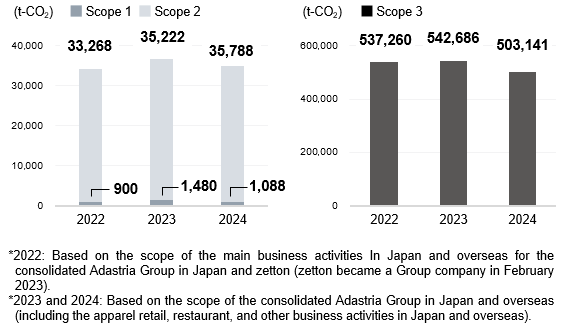
Climate change is not only a global issue, but also one of the most important risks to our business, threatens soaring raw material prices and supply chain disruptions caused by large-scale natural disasters. Balancing business growth with achieving carbon neutrality is a highly challenging mission. However, as we expand our business globally, we recognize the need to respond steadily to international standards and requirements on climate change and to steadily implement CO₂ reduction measures. We are formulating a business-wide CO2 reduction strategy based on the TCFD framework. Under this strategy, we execute and review initiatives over the medium to long term that are closely linked to our business strategy. Such initiatives include introducing renewable energy to offices and stores, reducing losses through demand forecasting, and building efficient logistics systems.
CO2 Reduction Scenario to Transition to a Decarbonized Society
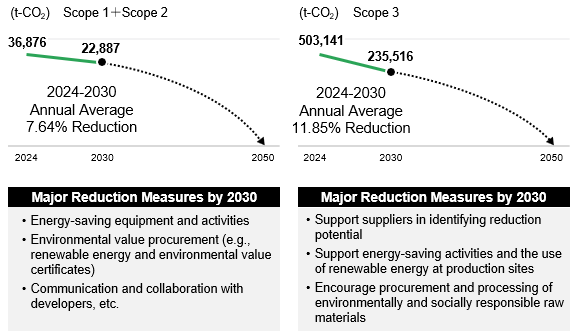
Global warming poses a significant medium- to long-term risk to business through rising raw material prices, supply chain disruptions, and other such factors. and ST HD discloses a CO₂ reduction scenario that covers our Scope 1 and Scope 2 emissions (from our own operations), as well as our Scope 3 emissions (from our value chain). For Scope 3, we help formulate CO₂ reduction plans for the production processes of the suppliers with whom we have direct transactions. Looking ahead, we will extend our efforts to secondary suppliers and beyond, including raw material cultivation and spinning, to address emissions more deeply and provide effective support. Note that we have confirmed our disclosed reduction scenario aligns with climate transition plans aimed at limiting global temperature rise to below 1.5℃.
Climate Change Risk & Opportunity Strategy for Apparel Retail
As an apparel retailer, our business is intrinsically linked to natural capital, with key raw materials like cotton, wool, and wood essential to our products. We have conducted a thorough analysis of climate change impacts on our supply chain, mapping out our adaptation strategies under two distinct futures: the 2℃ Transition Scenario and the 4℃ Physical Risk Scenario.
• 2℃ Scenario (Focus on Transition Risk): A world limiting warming to 1.6℃ by 2100 will usher in an era of intensified decarbonization and stricter governance. We anticipate increased operating costs as global carbon emission regulations tighten, extending our environmental responsibility across the entire value chain. Furthermore, sales will be sensitive to evolving consumer preferences driven by greater environmental awareness. Our proactive measures include developing an eco-conscious production system via innovative material development, production base diversification, and energy/water conservation, ensuring sustainable business growth through a robust portfolio.
• 4℃ Scenario (Focus on Physical Risk): This outcome, with warming reaching 3.5℃ to 3.9℃ by 2100, is characterized by severe and frequent natural disasters, posing a significant threat to the stability of global clothing and food supply. To safeguard business continuity, our priority is building a highly resilient supply chain. This will involve decentralizing and geographically diversifying our sourcing, production, and logistics networks—with a focus on key regions like China and ASEAN—to mitigate operational disruption.
Conclusion: Based on these analysis results, we are confident that we can achieve sustainable growth while maintaining business resilience, regardless of whether the 2℃ or 4℃ scenario materializes.
Visualization of Product Carbon Footprints
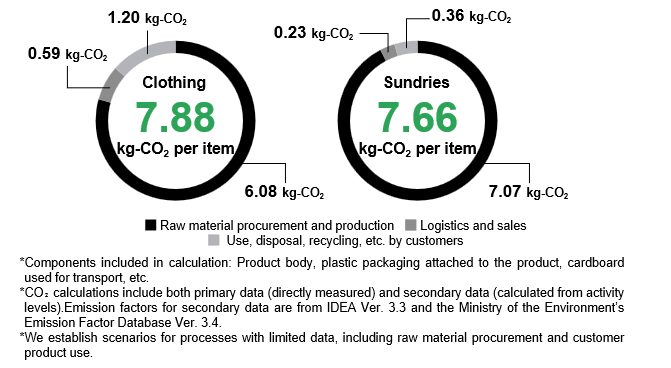
and ST HD thoroughly analyzes the life cycle of our products to identify CO₂ reduction potential in each process as part of our commitment to achieving carbon neutrality. We calculated and analyzed the average CO2 emissions per item for clothing and sundries, our main products. Through such analysis, we work with our business partners to reduce greenhouse gas emissions by developing specific strategies, including those to conserve energy in each process and switching to energy sources with lower environmental impact. Looking ahead, we will explore disclosing CO₂ emissions in product information to support consumer purchasing decisions.
Financial impact related to climate change

We are working to disclose information in accordance with the framework of the Task Force on Climate-related Financial Disclosures (TCFD).
Reducing Environmental Impact across the Value Chain
Reducing Adverse Environmental Impacts by Building an Efficient Logistics System
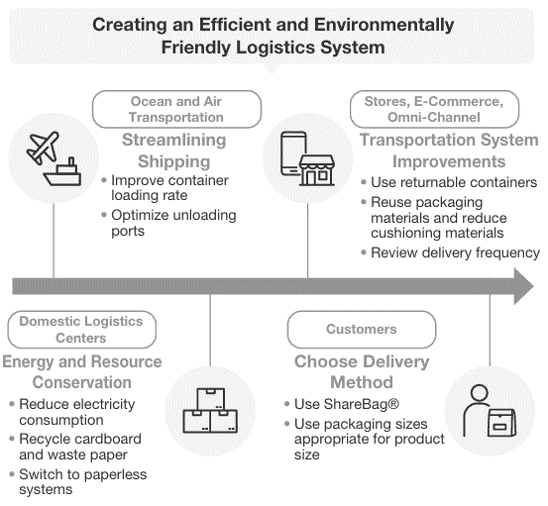
and ST HD strives to understand the CO2 emissions in our logistic activities. To this end, we identify the adverse environmental impacts on our business processes and implement appropriate reduction measures. Our distribution centers conserve resources by eliminating the use of delivery slips and receipts previously included with product shipments and using cardboard boxes that better match product sizes. We also reduce CO2 emissions by aiming to improve transportation efficiency through implementing comprehensive improvements. These efforts include improving delivery frequency and loading rates, as well as creating a joint delivery system.
New Shopping Style Created With Customers
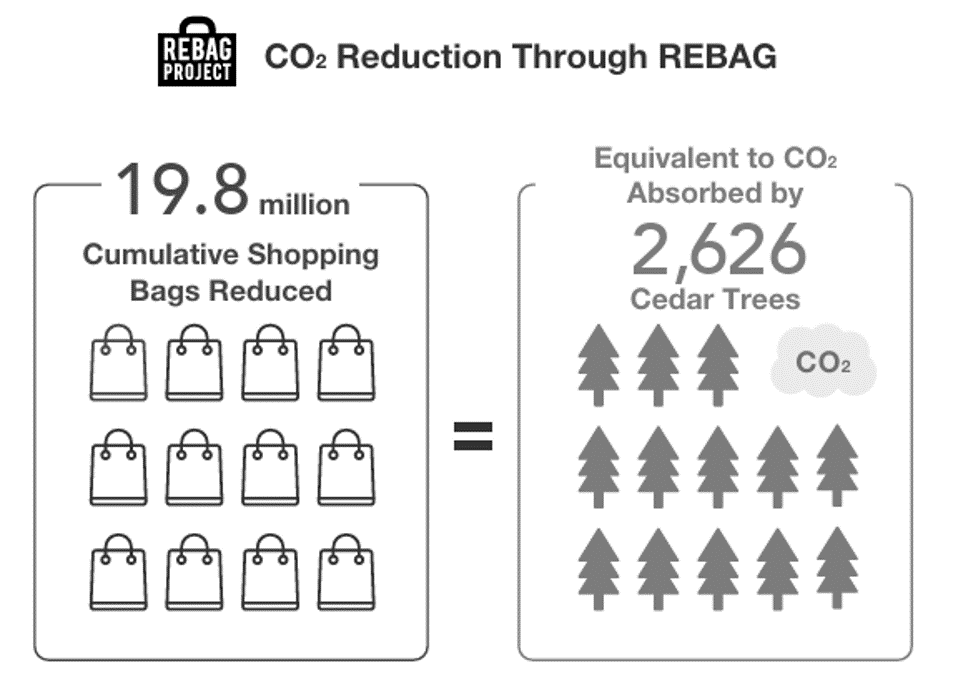
The REBAG PROJECT has reduced 19.8 million cumulative shopping bags by February 2024 over its 10-year history, creating a new shopping style that normalizes the use of reusable shopping bags. This cumulative total is equivalent to the annual amount of CO2 absorbed by 2,626 cedar trees (approx. 23 tons-CO2)*1. O0u is a D2C brand of ADOORLINK, a subsidiary of and ST HD. O0u offers services that provide customers with sustainable shipping choices. One such service is the Share Bag®, a returnable delivery bag for use in mailboxes provided by Comvey, Inc. More than 30% of O0u users chose the ShareBag® delivery option within the first month of its adoption. and ST HD will continue to work with our customers to create shopping styles that offer the fun of fashion as a sustainable choice.
*1 Assuming the annual CO2 absorption per cedar tree is approx. 8.8 kg
Biodiversity and Natural Capital
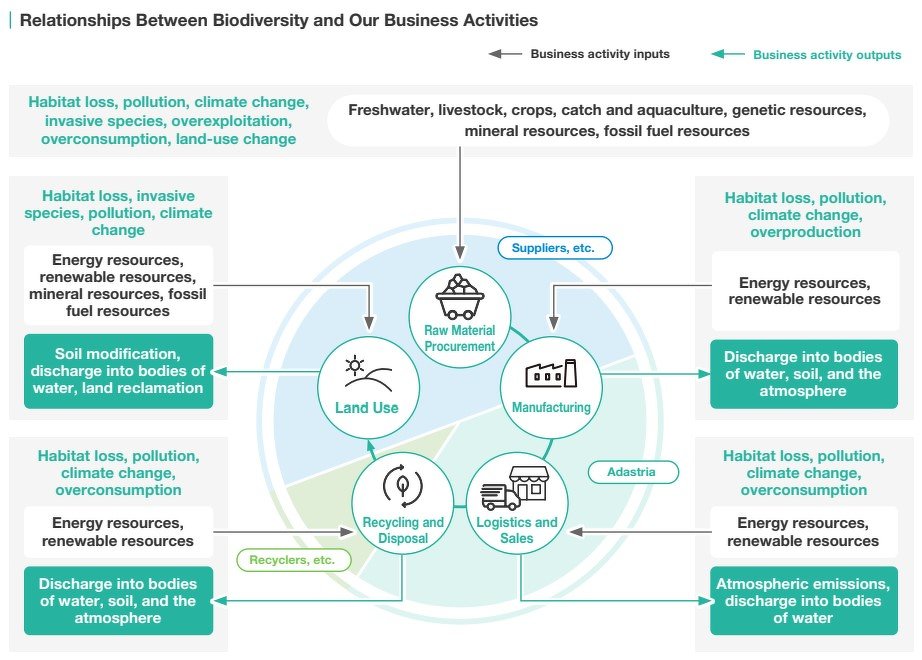
Our main business, apparel retailing, relies heavily on natural capital. To this end, we are committed to business that considers not only the environment but also biodiversity in all aspects of our business activities. If we had no concern for the global environment or biodiversity, our corporate activities would be unviable and customers would stop choosing our products and services. We will take full advantage of our accumulated knowledge and new solution technologies to organize nature-related dependencies and impacts in each process of our business activities, from raw material procurement to disposal and recycling.
Initiatives to prevent plastics from leaking into the ocean
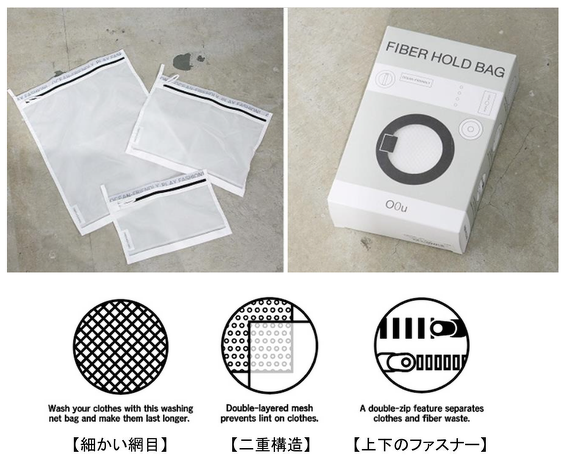
In recent years, textile waste from clothing and other items has become one of the causes of marine pollution. As an apparel company, we recognize the importance of addressing this issue. One way we are working to resolve this through our businesses is the FIBER HOLD BAG, a laundry net that can reduce textile waste spillage by 80%*. FIBER HOLD BAG is made of a fabric with a finer mesh (0.05 mm) than normal nets, allowing it to trap minuscule sizes of textile waste and keep it from spilling out. This is a unique product to and ST HD that not only helps prevent clothing deterioration from friction but also is more environmentally friendly during laundry.
*Spillage mitigation effects versus instances where no laundry net is used
Back to Materialities and Targets